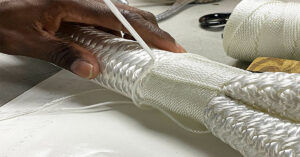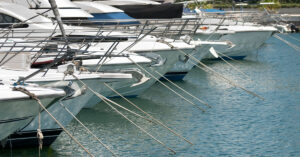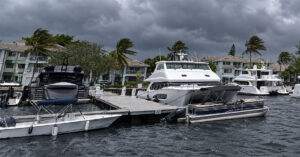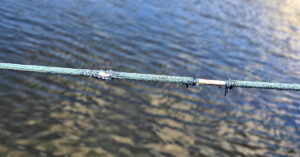
Rope failure is rarely caused by a single weather event. Major storms get blamed when lines part, but damage accumulates gradually over time.
Dock lines weaken through repeated surging and shock over the course of a season. Tidal swings and windy weather continually stress the fibers long before a line breaks.
Rope fatigue from storm stress accumulates continuously. Maintaining reliable dock lines requires monitoring how repeated weather exposure changes fiber structure over time.
The Single-Storm Myth
Storm damage becomes noticeable when a line parts or a cleat bends. The sudden nature of these events often makes them seem like the sole cause of failure.
Marine rope failures are progressive. Fibers undergo continuous cyclic loading, stretching and relaxing under tension, which degrades internal strength.
Dock lines lose strength over time without showing dramatic external damage. A line can appear intact while its safety margin shrinks.
What Repeated Storm Stress Actually Does to Rope
Synthetic rope handles heavy loads, but every strain cycle permanently alters the fiber bundle.
Wind and wave action create dynamic tension, repeatedly stretching and relaxing lines under fluctuating forces.
1. Internal Fiber Fatigue
Tensioning and releasing internal fibers creates microscopic fatigue that accumulates until the rope loses structural integrity.
2. Heat From Movement
Friction between yarns during expansion and recovery generates internal heat, breaking down synthetic polymers.
3. Localized Hard Wear
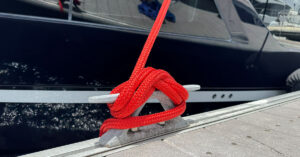
Storm motion concentrates stress at contact points like cleats and fairleads, combining mechanical fatigue with chafe under pressure.
4. Reduced Elastic Recovery
Fatigued lines lose elasticity, becoming stiff and unyielding. Reduced elasticity prevents the rope from absorbing future shock loads effectively.
Why Storm Season Is Harder on Lines Than One Big Blow
A single major storm produces high peak loads, but months of repeated smaller weather events cause greater cumulative structural wear.
Rope fatigue depends primarily on cycle count rather than peak force. Lines subjected to regular tidal surge and moderate winds accumulate high internal wear.
Boats kept in the water experience thousands of load cycles per season from minor ambient movement alone.
Repeated cycles of tension and release degrade rope safety margins. Mitigating shock load on dock lines reduces this progressive breakdown.
The Final Failure Is Usually a System Failure
Line failure creates immediate load shifts across remaining dock lines.
When a line parts, adjacent lines absorb the excess force. If neighboring lines are already fatigued, cascading failures occur quickly, altering vessel position and damaging deck hardware.
A single parted rope often triggers wider system collapse during dock line failure during a storm.
Warning Signs of Cumulative Fatigue
Repeated storm stress produces physical indicators before total failure occurs.
- Stiffness or resistance to coiling
- Flattened profiles along high-load contact areas
- Glazing, fuzzing, or surface abrasion near chocks and cleats
- Localized diameter reduction and changes in strand texture
Ropes that feel rough or rigid require evaluation. In many cases, stiff dock lines indicate internal fiber degradation alongside salt crystallization.
How to Reduce Rope Fatigue Across a Season
Proper setup and maintenance minimize the impact of storm loads on marine rope.
- Sizing and Material Selection: Nylon dock lines provide essential stretch for shock absorption, but line diameter must match vessel displacement and exposure conditions.
- Line Geometry: Properly positioned spring lines reduce fore-and-aft surging. Correct angles prevent excessive movement and hard shock loading.
- Chafe Protection: Anti-chafe sleeves must cover every contact point where rope rubs against hardware or gunwales.
- Regular Inspection: Post-storm checks identify structural fatigue and abrasion early, allowing replacement before failure.
Reliability Comes From Managing the Season, Not Just the Storm
Dock lines degrade over time through continuous load cycles and environmental exposure. Evaluating lines by service age and physical condition prevents costly gear failure.
Inspecting worked lines after heavy weather ensures dock arrangements remain reliable throughout the season.
FAQ: How Repeated Storm Stress Weakens Rope Over Time
Can rope lose strength without breaking?
Yes, repeated cyclic loading reduces line strength over time without causing immediate external breakage.
What is the mechanism of cyclic loading?
Cyclic loading occurs as wind, waves, tide, and surge continuously stretch, unload, and reload dock lines.
How do moderate weather events impact rope fatigue?
Internal fiber damage is cumulative, meaning multiple moderate weather events generate substantial internal fatigue across a season.
Is fiber fatigue visible on the outside of the rope?
Not always. Internal fiber degradation often occurs before external wear or fraying becomes visible on the cover.
Are stiff lines a warning sign of rope fatigue?
Stiffness, loss of flexibility, section flattening, and rough textures indicate internal fiber breakdown and salt buildup.
How frequently should dock lines be inspected?
You should inspect dock lines after every major weather event and at regular intervals during active boating months.
How do chafe and fatigue interact?
Chafe accelerates fatigue. Friction against chocks or cleats weakens localized sections, causing faster failure under tension.
What are the key replacement criteria for dock lines?
Replace dock lines exhibiting stiffness, localized thinning, heavy surface fuzzing, glazing, structural flattening, or permanent loss of stretch.