Knowing how to cleat a dock line properly is one of the most basic boating skills, but it is also one of the most commonly done wrong. A bad cleat hitch may look tidy at first, yet still slip, jam, or come loose under load. A correct cleat hitch, on the other hand, holds firmly, distributes force correctly, and can still be untied after tension has been removed.
A dock line is only as reliable as the way it is secured. You can have strong rope, solid hardware, and a good docking setup, but if the line is tied poorly to the cleat, the entire system becomes weaker. That matters in everyday docking, and it matters even more when wind, wake, tide, or surge start putting real strain on the line.
Why Proper Cleating Matters
A cleat is designed to secure a line by using friction and proper turns, not by relying on excessive knotting or brute force. When a dock line is cleated correctly, the load stays controlled and the rope remains easy to manage. When it is done incorrectly, several problems can develop:
- the line can slip under strain
- the hitch can capsize or loosen
- the rope can bind so tightly it becomes difficult to release
- load can concentrate unevenly on the cleat
- the line may rub or twist in ways that increase wear
In other words, poor cleating does not just look sloppy, it can contribute directly to failure. That is especially important if the line is already exposed to shock, surge, or chafe. If you are dealing with high-load docking conditions, it also helps to understand how to protect dock lines from chafe under pressure, because a properly tied line still needs protection at friction points.
What a Cleat Hitch Is Supposed to Do
A proper cleat hitch does three things well:
- Secures the line under load
- Prevents slipping without excessive wraps
- Allows release when conditions are safe
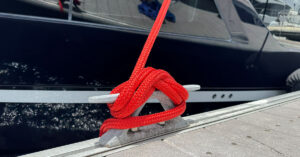
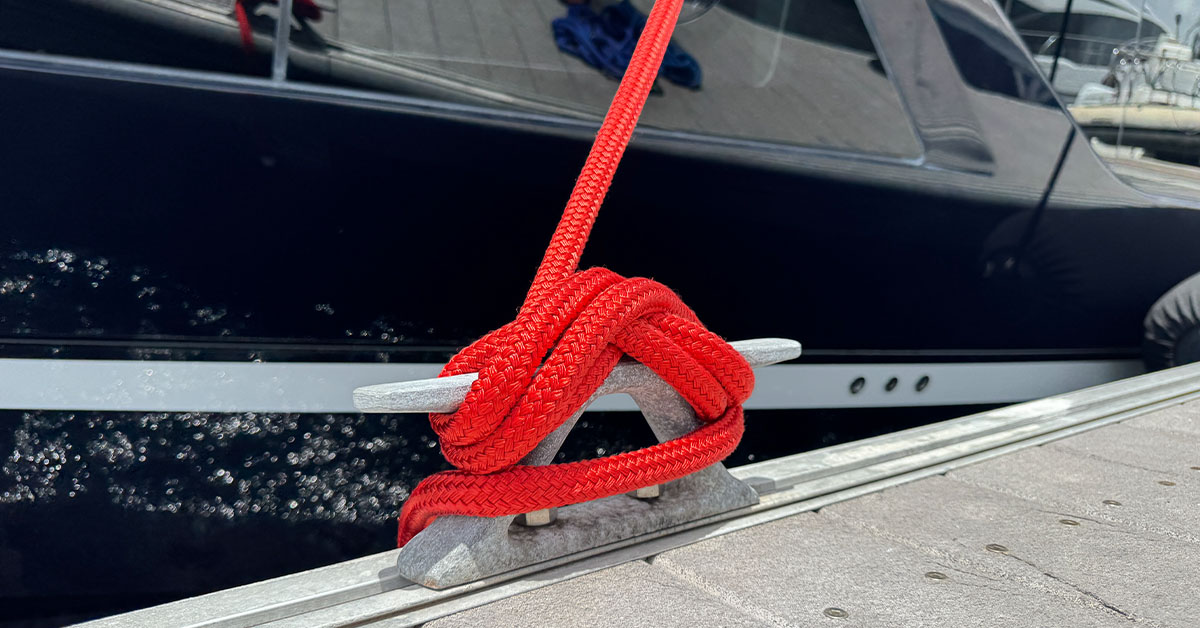
The cleat hitch is not meant to be a complicated knot. In fact, its strength comes from simplicity. The line should make a full turn around the base of the cleat, then cross in a clear figure-eight pattern over the horns, and finish with a locking half hitch.
Done right, it holds because the line is working with the cleat’s shape. Done wrong, it often depends on tension, luck, or too many extra wraps.

How to Cleat a Dock Line Correctly
The basic process is straightforward.
1. Take a Full Turn Around the Base
Start by wrapping the line once completely around the base of the cleat. This first turn is important because it helps absorb the load and gives you control of the line before finishing the hitch.
Do not skip this step when the line is under tension. The full turn reduces strain on your hands and helps prevent the rope from jerking free while you tie it off.
2. Make a Figure-Eight Across the Horns
After the full turn, bring the line diagonally over the top of the cleat to the opposite horn, then back across to create a figure-eight pattern. This distributes the load and creates the friction that helps the hitch hold.
The wraps should lie neatly, without tangles or overlapping turns that pinch awkwardly.
3. Finish With a Locking Half Hitch
On the final pass, make a small loop in the line, twist it into a half hitch, and drop it over one horn so it locks the hitch in place. This final tuck is what keeps the line from jumping loose.
That finishing hitch should be clean and intentional, not a random extra wrap.
4. Check the Lead Angle
Once the line is secured, look at how it exits the cleat. The pull should be fair and direct, without sharp twisting that could distort the hitch or force the line against an edge. A line that leads badly from the cleat may hold poorly and chafe faster.
Common Mistakes That Cause Problems
A lot of dock lines are tied in ways that seem secure but are actually less reliable than a standard cleat hitch.
Too Many Wraps
One of the most common mistakes is piling on extra turns. People often assume more wraps mean more security, but too many wraps can jam the line and make it harder to release. A proper cleat hitch does not need a mountain of rope on the cleat.
No Full Turn Around the Base
Without that initial turn, the line may be harder to control under load. This is especially noticeable when a boat is moving or the rope is already tight.
Wrong Final Lock
Sometimes boaters finish with a messy loop or just tuck the bitter end under a wrap. That may appear to hold temporarily, but it is not the same as a proper locking half hitch.
Backwards or Stacked Turns
If the line is wound inconsistently or stacked on itself instead of laid in a figure-eight, the hitch may not grip the way it should. A bad pattern can also create pressure points in the rope.
Tying a Knot on the Cleat
A cleat hitch is not meant to become a bulky knot. Turning it into one defeats the purpose of fast, secure, manageable line handling.
Using a Cleat That Is Too Small or Poorly Mounted
Sometimes the problem is not the hitch at all. If the cleat is undersized, loose, corroded, or badly backed, even a perfect hitch may not save the setup.
Why a Bad Cleat Hitch Fails Under Load
A bad cleat hitch usually fails because the load exposes weaknesses in the tying pattern.
Under real strain, a poorly secured line may begin to creep. If the turns are wrong, the rope does not grip the cleat evenly. If the finish is sloppy, vibration and motion can work the line loose. If there are too many wraps, the hitch may hold at first but become impossible to adjust or release when needed.
Load also changes how force moves through the line. A dock line in calm water is one thing. A dock line under repeated surge, wake, or storm pressure is another. That is why small mistakes matter more in rough conditions. If the boat is moving enough to shock-load the line, a weak hitch can quickly become a failure point.
This is also why overall docking setup matters. If one line is tied badly and fails, it can increase load on the rest of the system. In severe weather, that added strain can escalate quickly, especially when surge and sudden loading start compounding across the system, which is why it helps to understand how to reduce shock load on dock lines.
Good Cleating Habits That Improve Reliability
Proper technique is the starting point, but a few habits make cleated dock lines even more dependable:
- use the right size line for the cleat
- keep the hitch neat and easy to inspect
- avoid sharp lead angles off the cleat
- inspect the cleat for cracks, corrosion, or movement
- re-check heavily loaded lines after weather or tide changes
- teach everyone on board the same correct method
Consistency matters. A correct cleat hitch should be repeatable, fast, and easy for anyone handling the boat to recognize.
Mastering the Cleat Hitch
Learning how to cleat a dock line correctly is one of those simple seamanship skills that pays off every time you dock. The right cleat hitch is strong, efficient, and easy to manage. The wrong one may look acceptable until load, motion, or weather prove otherwise.
If you want a dock line to actually hold, do not rely on guesswork, extra wraps, or “good enough” technique. Start with a full turn, lay clean figure-eights, finish with a locking half hitch, and make sure the line leads fairly off the cleat. Small details make a big difference when the load comes on.
FAQ: How to Cleat a Dock Line
What is the correct knot for tying a dock line to a cleat?
The correct method is a cleat hitch. It uses a full turn around the cleat base, figure-eight wraps over the horns, and a final locking half hitch.
Why should you take a full turn around the base first?
The full turn helps control the line under load and reduces strain while tying. It also helps the hitch hold more securely.
Can you use extra wraps to make a cleat hitch stronger?
Usually no. Too many wraps can jam the line and make it harder to release. A proper cleat hitch is designed to hold with a clean, standard pattern.
Why does a bad cleat hitch slip?
It slips because the line is not gripping the cleat correctly. Poor wrap pattern, missing turns, or an improper finish can all allow movement under load.
Should a dock line be tied tightly to the cleat?
It should be secured firmly, but not in a way that creates a tangled or overwrapped hitch. The line should lead cleanly and hold through the cleat hitch design, not because it has been knotted excessively.
Is a cleat hitch easy to untie after loading?
Yes, if it is tied correctly and the load has been removed. One advantage of the cleat hitch is that it is secure under strain but still manageable afterward.
Can a properly tied dock line still fail?
Yes. Even a correct hitch cannot compensate for worn rope, chafe, bad hardware, or extreme overload. The hitch is only one part of the full docking system.
What is the biggest mistake people make when cleating a dock line?
One of the biggest mistakes is using too many wraps or creating a messy knot instead of a true cleat hitch.