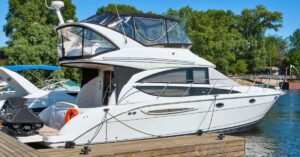
Dock lines rarely fail from sheer tensile strength. Failures usually occur because the rope wears through at specific points where it rubs, stretches, and grinds against hardware or dock edges. Chafe is the primary culprit. When a boat surges against wind, wake, or tide, this localized abrasion destroys even high-strength lines faster than many boaters expect.
Understanding where lines wear and how to protect those pressure points is the most effective way to prevent parted lines, damaged hardware, and dockside accidents.
Why Chafe Occurs Under Load
Chafe occurs when a line moves against a surface. Under light loads, this contact may only polish the surface fibers. Under heavy strain, friction and compression increase. The rope flattens, generates internal heat, and grinds against fittings or edges. Constant motion causes the fibers to break down.
High loads accelerate this process because the rope is forced into the surface rather than merely touching it. Even smooth hardware becomes a cutting edge when a boat pitches or surges in one direction for long periods.
Common High-Load Friction Points
Not every part of a dock line wears evenly. Damage concentrates at predictable locations where the line experiences the most motion or compression.
Chocks and Fairleads
These are common chafe points on any boat. If the line passes through a narrow opening or over a metal edge, repeated movement abrades the outer fibers. The risk increases when the angle of pull shifts due to tides, wakes, or wind.
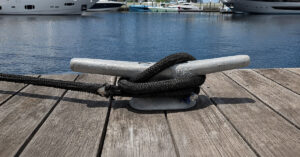
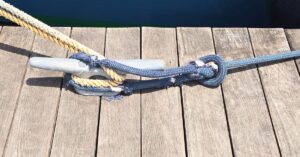
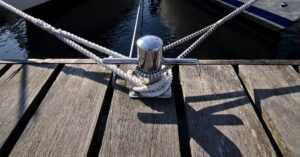
Cleat Edges and Horns
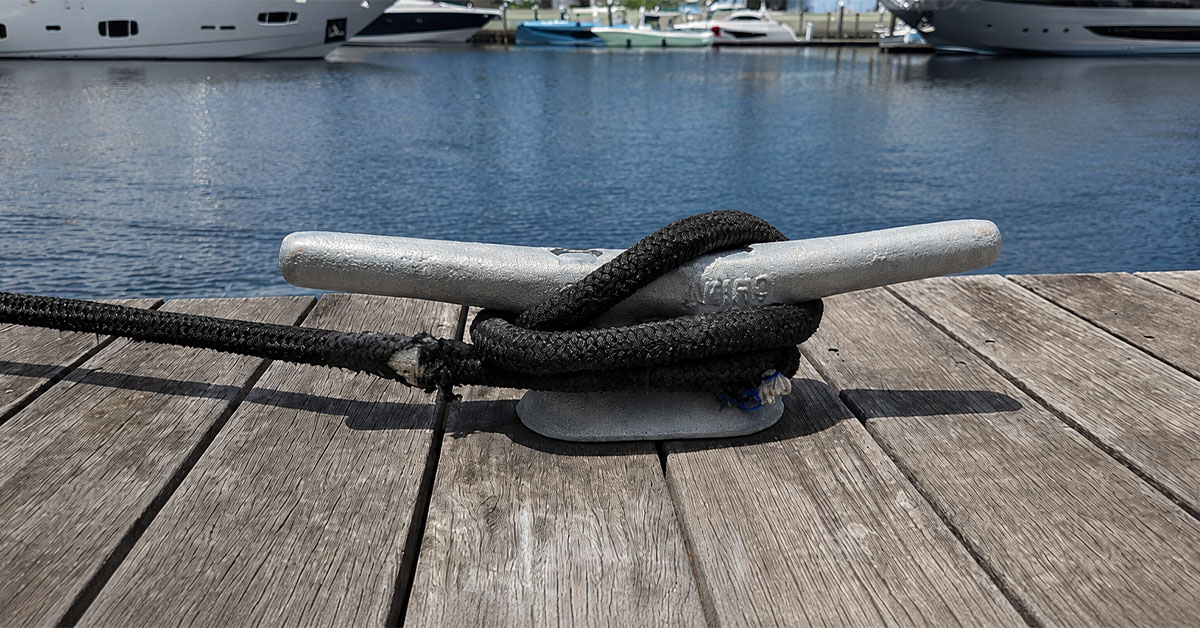
A properly tied line should bear on the base of the cleat rather than sawing across sharp or rough surfaces. In real-world conditions, lines shift. If the rope works against the wrong part of the cleat, localized abrasion starts quickly.
Pilings, Dock Corners, and Rub Rails
In some slips, the line comes into contact with timber, concrete, or dock hardware as the boat moves. Rough wood, exposed fasteners, and square dock corners are destructive to a loaded rope.
Toe Rails, Stanchion Bases, and Pulpit Supports
Improvised lead angles often create hidden friction points. A line that appears clear at rest may begin rubbing against nearby hardware once the boat swings or settles under strain.
Line Crossings and Self-Chafe
The problem can also stem from the rigging itself. Two lines rubbing against each other, or a line rubbing against a splice, knot, or coil, will create wear over time.
Identifying Warning Signs
A line rarely goes from intact to failure without visible warnings. Inspect your lines for these indicators:
- Fuzzy or flattened outer fibers
- Discoloration or glazing caused by heat
- Black marks or abrasion residue on hardware or rope cover
- Cut or melted strands
- Stiff sections in otherwise flexible rope
- Noticeable thinning at a specific contact point
If you see these signs, the line needs immediate attention. Once the load-bearing fibers are compromised, the rope strength decreases significantly.
Strategies for Prevention
Protecting dock lines requires reducing friction, distributing the load, and limiting boat movement.
Use Chafe Guards at Contact Points
Place chafe protection exactly where the line rubs. Common materials include reinforced hose, leather, webbing, and synthetic sleeves. Ensure the guard is secured. If it slides away from the wear point, it fails to protect the rope.
Improve the Lead Angle
A line that exits a cleat or chock at a harsh angle wears faster than one that runs fair and straight. Repositioning the line, using a different cleat, or changing dock attachment points reduces concentrated abrasion.
Increase Line Diameter
A heavier line tolerates abrasion and shock loads better, provided it remains suitable for the cleats and fittings. More material at the wear point provides more time before damage becomes critical.
Add Spring Lines
Spring lines reduce fore-and-aft motion. By restricting the surge of the boat, you reduce the repetitive rubbing that drives chafe in exposed slips.
Balance Tension
If one line takes the majority of the load, it absorbs the most chafe. Even load distribution across multiple lines helps each rope work less aggressively and reduces wear at individual points.
Inspect After Weather Changes
A setup that works in calm weather may chafe badly during a blow or strong tidal swing. Check lines after storms, passing wakes, or changing water levels to identify newly formed wear points.
Selecting Chafe Protection Materials
Different situations require different solutions.
- Leather: Durable and traditional. It is effective for fixed wear points on long-term setups.
- Fire hose or reinforced hose: Tough and widely used. It requires proper securing to stay in position.
- Webbing sleeves: Flexible and easy to fit, making them a good match for many synthetic dock lines.
- Commercial chafe guards: Designed specifically for rope protection and often easier to install neatly.
Select a material that does not trap water, create new hard edges, or interfere with knot security.
Managing Stretch and Shock Load
Chafe links directly to shock loading. When a boat jerks against taut lines, the rope moves violently through contact points. Nylon is preferred for dock lines because of its stretch, which absorbs shock. However, even nylon chafes when over-tensioned or run across poor hardware. A line that is too tight suffers more abrasion because it cannot absorb motion gradually.
Routine Maintenance
Dock line inspection must be part of your regular boat care, especially for vessels kept in the water full-time. Focus on:
- Every point where the rope touches hardware
- Areas hidden inside chocks or guards
- Sections near the boat end and dock end
- Lines used during recent heavy weather
- Backup lines and seasonal spares
If a line shows serious wear, replace it. Dock lines typically fail at the most inconvenient times.
Effective chafe protection relies on a smart setup. Identify high-load friction points, reduce unnecessary movement, use targeted protection, and inspect lines before wear becomes dangerous. In tough docking conditions, the strongest line is only as reliable as its most abused contact point.