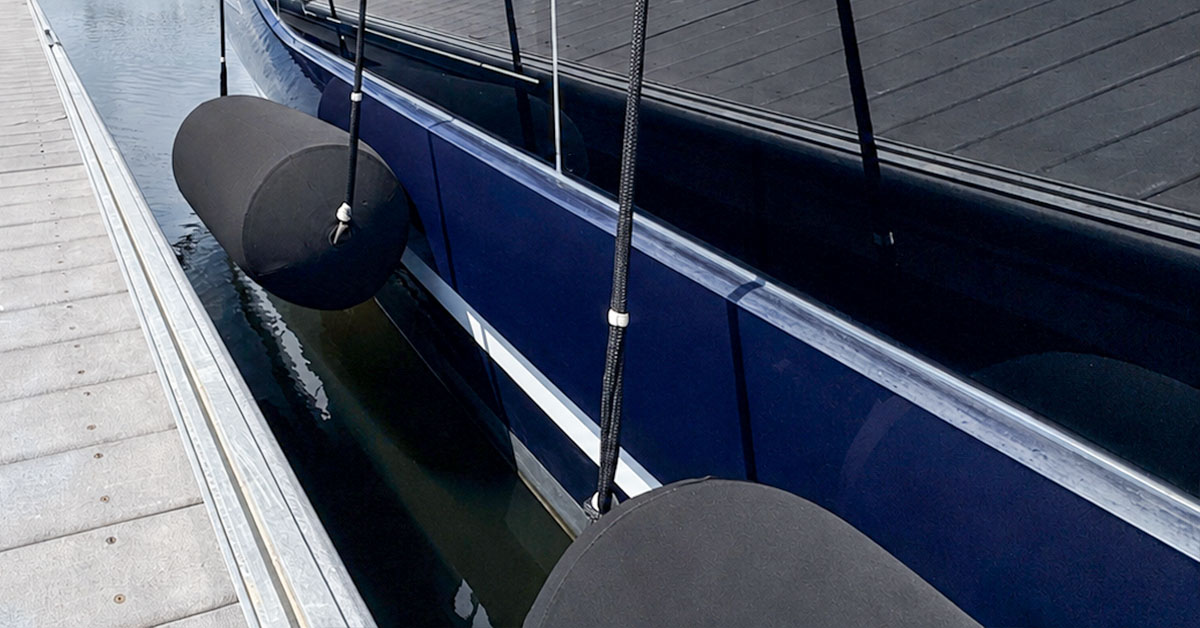
Most boat owners carefully evaluate dock lines. They consider diameter, material, stretch, and chafe resistance to secure the boat under varying conditions. Fender lines are frequently treated as an afterthought, viewed simply as a means to hang a fender and keep it from falling overboard.
Downloadable Resource: Cleat & Fender Setup Quick-Reference (PDF)
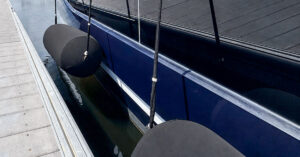
Fender lines protect the hull when the boat moves against pilings, finger piers, seawalls, or neighboring boats. An undersized, poorly tied, or improperly placed fender line allows the fender to shift, ride up, sink, or detach. The hull then loses its buffer at the moment of highest impact.
Fender lines are as critical as dock lines. One system secures the boat, and the other manages the damage that occurs when a boat moves within the slip.
Fender Lines Are Part of the Protection System
A dock line controls position. A fender line protects contact points.
Even a well-secured boat moves due to wind, wake, tide, and surge. An incorrect fender setup causes gelcoat scuffs, crushed rub rails, scraped topsides, and hard impacts against the dock.
Treat fender lines as working gear, not decorative accessories. Failure of a fender line leads to predictable problems:
- Hull rub in repeated spots
- Fenders that roll out of position
- Fenders that shift upward and become useless
- Fenders that drag in the water
- Lost fenders from failed lines or knots
Prioritize the gear protecting the hull surface just as you prioritize the gear securing the boat.
Why Fender Lines Fail
Fender lines fail for predictable reasons.
Undersized Line
A thin line may seem sufficient for hanging a fender, but it wears quickly, slips, and is difficult to secure. Small-diameter cord cuts into hands and jams when adjusted under tension.
Poor Attachment Point
A fender line tied to the wrong rail, lifeline, or stanchion allows excessive shifting. Fender lines must be attached where they hold position without damaging hardware.
Bad Knot or Loose Hitch
A sloppy hitch allows the line to creep downward or release. The fender slowly slides away, failing to protect the impact point.
Wrong Length
A line that is too long allows the fender to hang too low or swing. A line that is too short keeps the fender above the actual contact zone.
Chafe
Fender lines chafe where they pass over rails, through eyes, or around rough hardware. Movement against a hard edge eventually cuts the line. This is the same principle of wear that affects dock lines, as discussed in How to Protect Dock Lines from Chafe Under Pressure.
Sizing Fender Lines Correctly
Fender lines require sufficient strength and ease of handling.
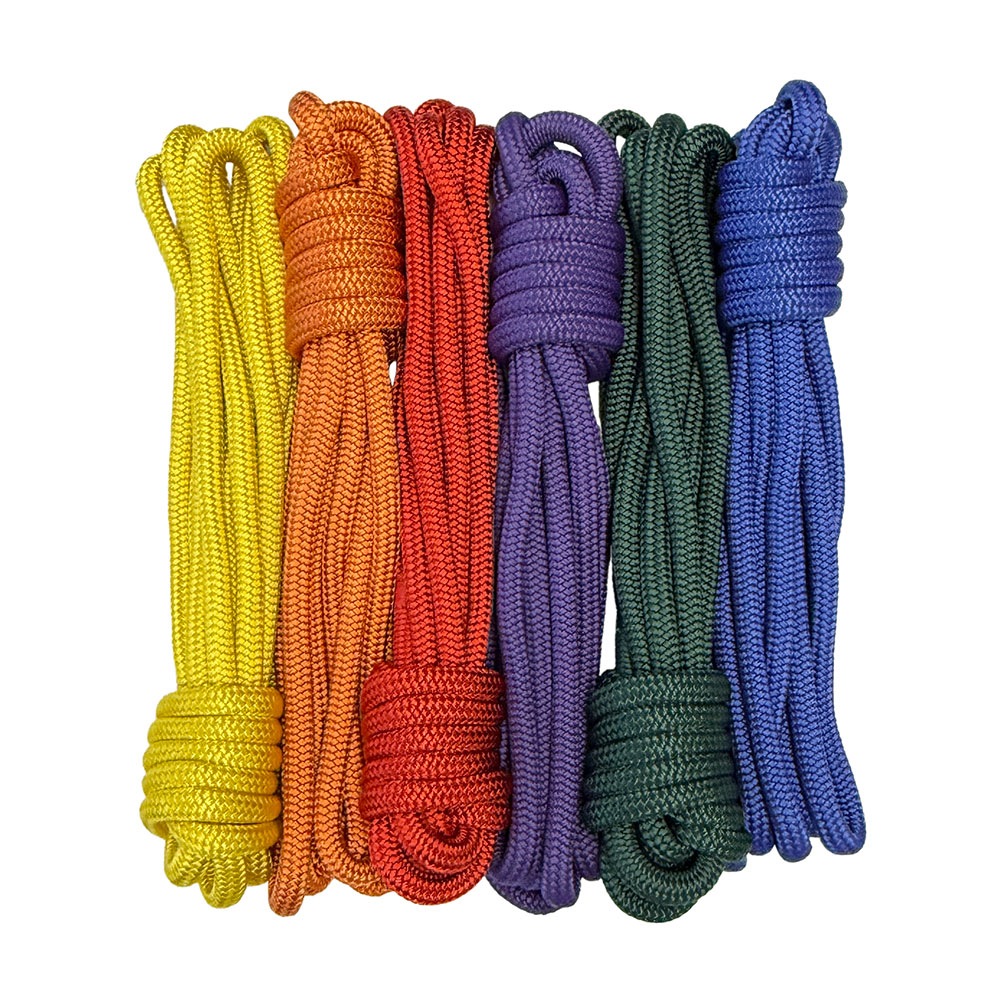
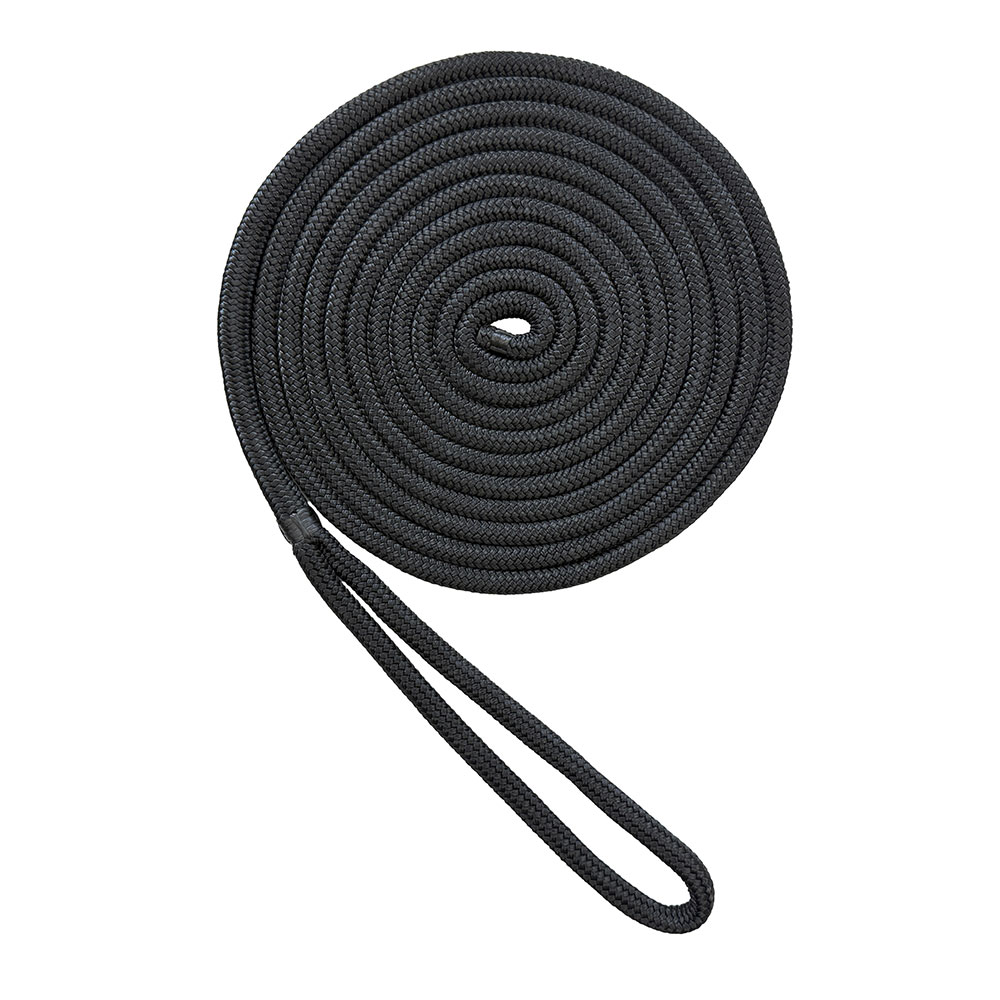
The right size depends on the fender dimensions, boat size, expected movement, and frequency of adjustment. The goal is reliable control, not maximum bulk. A fender line must grip well, hold knots cleanly, and resist wear without becoming too bulky to tie through small eyes or rail openings.
- the size and weight of the fender
- the size of the boat
- expected movement at the dock
- how often the fender will be adjusted or repositioned
A line that feels too light, slick, or difficult to secure indicates a need for an improved setup. For most recreational boats, prioritize manageability, knot security, and wear resistance.
Attachment Points Matter
The attachment point is as important as the line itself. A fender functions only if it stays in the correct location. Attach the line to keep the fender aligned with the likely contact zone rather than selecting the most convenient point on deck.
Common attachment options include rails, cleats, fender hooks, and pad eyes. Avoid points that allow excessive wandering or place stress on hardware not designed for side movement.
Rail Attachment
Rails are convenient for temporary placement. If the rail angle or height is incorrect, the fender rolls, twists, or rides too high.
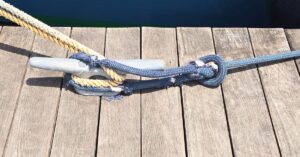
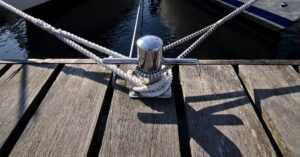
Cleat Attachment
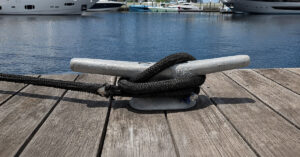
Cleats provide a secure attachment point but should not become cluttered with multiple lines. If a cleat holds a primary dock line, avoid overloading it with messy fender rigging.
Stanchions and Lifelines
These are often used casually but are rarely ideal. If the fender line pulls on stanchions or distorts lifelines, the setup may create further hardware issues.
The Problem: Fender Position
Many boats deploy fenders that fail to cover critical impact zones.
The Fender Rides Too High
A line tied too short or attached too high leaves the lower hull exposed.
The Fender Hangs Too Low
A line that is too long allows the fender to drop below the contact point or drag in the water, rendering it useless.
The Fender Slides
A poorly secured line or smooth rail attachment allows the fender to drift away from the impact area.
The Fender Gets Squeezed Out
Incorrect placement allows pressure between the boat and dock to push the fender upward or out of the gap.
Confirm that your fenders will remain in the correct place after the boat has moved for hours.
Real Consequences
Badly rigged fender lines cause expensive, gradual damage:
Wrong Setup, Real Consequences
- Rubbed-off finish or gelcoat marks
- Dented rub rails
- Scraped hull sides
- Lost fenders
- Repeated impact in one unprotected section
- Strain on rails and hardware
Damage often goes unnoticed until it is irreversible. A shift of a few inches may expose a vulnerable hull section all day.
Fender Lines and Dock Lines Work Together
Dock lines and fender lines are a unified system. If dock lines allow excessive surge, fenders take more abuse. If fenders are poorly positioned, even a solid docking setup leads to hull damage. Proper spring line use limits fore-and-aft surging, as detailed in Spring Line Setup: The Key to Secure Docking.
If dock lines experience repeated shock loads, the boat may lunge harder against the fenders. Reducing this motion benefits both systems, as explained in How to Reduce Shock Load on Dock Lines.
A solid fender setup requires intentionality.
- Use line appropriate for the fender size.
- Check knots and hitches regularly.
- Tie to stable, logical attachment points.
- Adjust height to match actual dock contact zones.
- Inspect for chafe near hardware.
- Reposition fenders as tides, slip angles, or dock heights change.
The Bottom Line on Secure Docking
Fender lines perform a task equal in importance to dock lines. Dock lines hold the boat in position, while fender lines prevent that movement from causing damage.
An undersized, poorly attached, or improperly set line renders the fender ineffective. Treat fender lines as essential working gear to ensure they protect the boat when conditions are challenging.
FAQ
Do fender lines really matter as much as dock lines?
They serve different purposes, but yes, they matter a great deal. Dock lines hold the boat in position, while fender lines keep fenders in the right place to protect the hull from rubbing and impact.
What size should fender lines be?
They should be large enough to handle the fender securely, resist wear, and tie cleanly without slipping. The ideal size depends on the boat, fender size, and how much movement the boat experiences at the dock.
Where is the best place to tie a fender line?
The best attachment point is one that keeps the fender aligned with the likely contact zone and prevents excessive movement. Rails, cleats, and dedicated fender points are common choices, depending on the boat.
Can I tie fender lines to the same cleats as my dock lines?
Sometimes, yes, but it is not always ideal. If the cleat is already handling important dock lines, adding fender lines can create clutter and make adjustment harder.
Why do fenders slide out of place?
Usually because the line is tied poorly, attached at the wrong point, too loose, too long, or allowed to move along a rail or fitting.
Can a fender line chafe like a dock line?
Yes. Fender lines can wear where they rub against rails, hardware, or rough edges. They should be inspected regularly, especially on boats that stay docked for long periods.
Why do I keep losing fenders?
Lost fenders are often caused by bad knots, weak line, poor attachment points, or too much movement that works the line loose over time.
How high should a fender hang?
It should be positioned so the thickest part of the fender protects the actual contact zone between the boat and dock. That height may need adjustment depending on tide, dock height, and boat movement.
Are fender lines only important in rough conditions?
No. Even in calm marinas, boats move enough to rub, bump, and shift. Fender lines matter anytime a fender is needed to stay in place and protect the hull.